
Brewing Beneficial Byproducts: Reducing Impacts of Industrial Wastewater

Collin Munyan, Climate Finance Fellow, discusses wastewater and how the brewery industry is particularly connected to it, sharing special insights from one of his events.
Wastewater
How often do you think about where your trash goes? When you fill up trash bags and place it either in a dumpster or in a bag on the curb to be picked up, it sometimes sparks thoughts about impact and what happens next, while other times it removes it from thought altogether. How about when you flush your toilet or dump grease down the sink? When you don’t see the buildup of waste or the smelly trucks driving around once a week, it’s even easier to ignore where it ends up. Mainstream discussions of waste often focus on solid trash that is hauled directly to landfills, a form of waste that’s highly important to address, but there is a hidden waste that lies in the water bill homeowners receive each month.
Until I started my service with the New England Environmental Finance Center (NEEFC), I had given little thought to wastewater as a major form of environmental concern. While the topic had come up in discussions around how our college tested dorms for cases of Covid-19, and briefly in a college class titled “Water” that I took as a core requirement, I had never given it much more consideration.
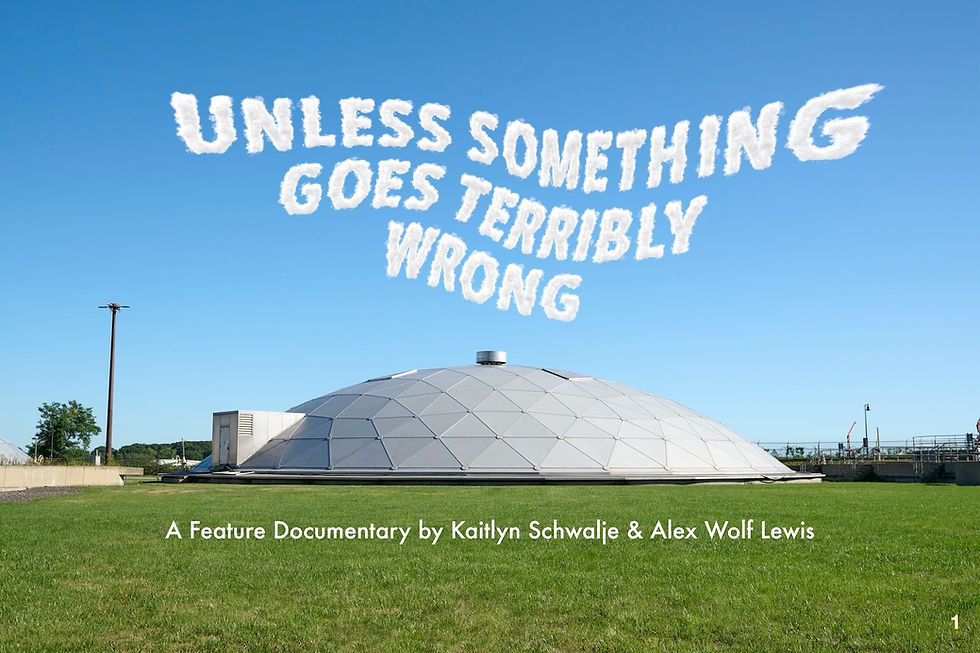
This ignorance around wastewater is a persistent theme for wastewater operators, including those at Portland, Maine’s East End Wastewater Treatment Plant (WWTP). This truth was made clear in the 2025 award-winning documentary titled, Unless Something Goes Terribly Wrong. This film, featuring the East End WWTP, takes viewers through the lives of operators who work tirelessly to ensure that the water is effectively treated before being discharged into Casco Bay. The film highlights the extensive regulatory changes, aging infrastructure, resident complaints, and workforce challenges that wastewater operators deal with regularly. As the film’s title creatively points out, residents rarely think about wastewater treatment unless something goes terribly wrong, in which residents may occasionally smell the products of their own creation. When I had the chance to see this film earlier this year at the Portland Museum of Art, it provided a great insight into this world of wastewater treatment and complemented the brewery waste issues I had been researching.
Brewery Wastewater and Byproducts
While the sum of all households may produce the majority of wastewater received by WWTPs, certain industries also play significant roles in wastewater production and effective treatment. Breweries are one of those primary industries of interest, especially in the state of Maine where craft breweries are prevalent – Maine has the second most breweries per capita of any state. At the NEEFC, one of our main programs works to promote pollution prevention and sustainable practices within craft beverage manufacturers – focusing on breweries. As an AmeriCorps fellow, I’ve supported efforts in this program around improving brewer-municipal relations, especially around wastewater and beneficial reuse of byproducts.
Similar to households, not all industrial producers know what they send down the drain either, unless they have gotten into trouble or been forced to learn. Many breweries, especially small craft breweries, fit this description. Throughout the process of brewing beer, breweries produce wastewater and residuals that measure extremely high in two primary areas – biochemical oxygen demand (BOD), and total suspended solids (TSS). BOD, which measures how much oxygen is needed to break down organic material in the water, can be up to 200x more concentrated in brewery wastewater compared to domestic wastewater. TSS, which measures the amount of undissolved solids in the water, can be over 20x as concentrated in brewery wastewater compared to domestic water. Wastewater high in both BOD and TSS is significantly more demanding to treat at WWTPs and can pose major concerns for systems in small communities.
This problem with brewery wastewater has led to certain breweries piloting innovative solutions to limit their impacts on WWTPs. Many of the initiatives I have focused on have surrounded the use of brewery residuals for agricultural purposes. Many of the organic residuals created in the brewing process have valuable nutrients that can be recaptured for agricultural benefits. One farm in Brunswick, Maine, Crystal Spring Farm, offers a great case study by taking a liquid residual, called trub, from Maine Beer Company, and applying it to their hay fields. This relationship both reduces the amount of waste being discharged into the sewer and creates a valuable product that reduces the need for synthetic fertilizer.


Film Screening Event and Panel Discussion
This type of unique relationship between Crystal Spring Farm and Maine Beer Company is something that the NEEFC wants more craft breweries to know about and model to reduce their impacts on WWTPs. With this goal in mind, I spent several months coordinating logistics around an event to feature this topic. As the core focus of the work with craft breweries being their wastewater management, it seemed obvious that showcasing the documentary Unless Something Goes Terribly Wrong would be a great way to connect the worlds of wastewater and brewing.
On October 1st, the months of coordinating logistics culminated in an event at Maine Beer Company that featured a screening of the documentary, and a panel discussion that included Jon McCabe, the Superintendent of Freeport’s WWTP, Dave Love, the Maine Beer Company’s Sustainability Manager, and Seth Kroeck, the owner of Crystal Spring Farm. With the goal of improving industry operations with wastewater, screening a wastewater documentary in front of a diverse audience of 100 people was a great first step in exposing people to the world of wastewater treatment. As a second step, the panel discussion highlighted the critical intersection between wastewater, brewing, and agriculture.

Jon McCabe, who manages the plant that receives wastewater from Maine Beer Company, spoke of the differences between municipal and brewing wastewater and the additional resources required to treat what comes from breweries. Dave Love spoke about the efforts that they are undertaking to increase Maine Beer Company’s awareness of the contents of their wastewater, reduce their point source pollution, and increase side streaming – the process of removing contaminants before they reach waste systems. Seth Kroeck spoke of the value that the brewing residuals offer to his farm while reducing the need to buy additional fertilizers, and how the relationship formed between the farm and the brewery.
When asked about establishing strong relationships between each sector, each of the panelists strongly emphasized the importance of communication. Between the brewery and the WWTP, it’s important for the brewery to communicate if there are going to be any significant discharges or potential contaminants, and it’s important for the WWTP to inform the brewery of any changes to treatment or unanticipated issues. Between the farm and the brewery, it’s critical to establish clear communication to ensure that each business’ needs are met while satisfying the relationship and ensuring that both regular operations and long-term planning are communicated clearly.

At the end of the night, when they were asked if they had any suggestions on potential changes that need to happen to improve these industry relations, they offered somewhat unique insight. Jon McCabe suggested that general knowledge of where the waste goes is critical, mirroring one of our goals for the event. Dave Love suggested that it’s important to involve experts in waste management to ensure best practices are met and developed, and that conversations are regularly had. Seth Kroeck suggested that spending time developing strategies for handling the materials is the most important piece because the waste streams and associated systems are not straight forward, so dedicating time is critical to establish strong relationships and practices.
With the event attracting individuals from the wastewater, brewing, and farming communities, we were excited to be able to highlight each topic and encourage people to connect with one another while enhancing their knowledge on the matter. As I finish out my AmeriCorps service, my goal is to continue to improve the way and understanding around how individuals and industries treat their resources beyond disposal.
About Collin

Collin was born and raised in southeast Pennsylvania, spending most of his years in Malvern. He recently graduated with a B.A. in Environmental Economics and a minor in Philosophy from Colgate University. In his early time at Colgate, he had an undecided degree until certain classes inspired greater interest in the environment. Having an established interest in economic topics, this soon led Collin to want to explore the intersection of the two. Throughout college, his environmental passion expanded, leading him to become an intern with the University’s Office of Sustainability. In his time as an intern, he helped cultivate the development of projects aimed at fighting food waste and upcycling, supported student engagement with sustainability topics, and assisted with the campus’ GHG report. Following his graduation, Collin sought deeper immersion in nature, which led him to participate in a two-month-long conservation volunteer experience throughout Iceland’s national parks. As a Resilience Corps Fellow, he is excited to build on his past experiences and help broaden the access to and success of the programs within the New England Environmental Finance Center. In his free time, he is also excited to explore Maine and enjoy the natural beauty of the state.


Comments